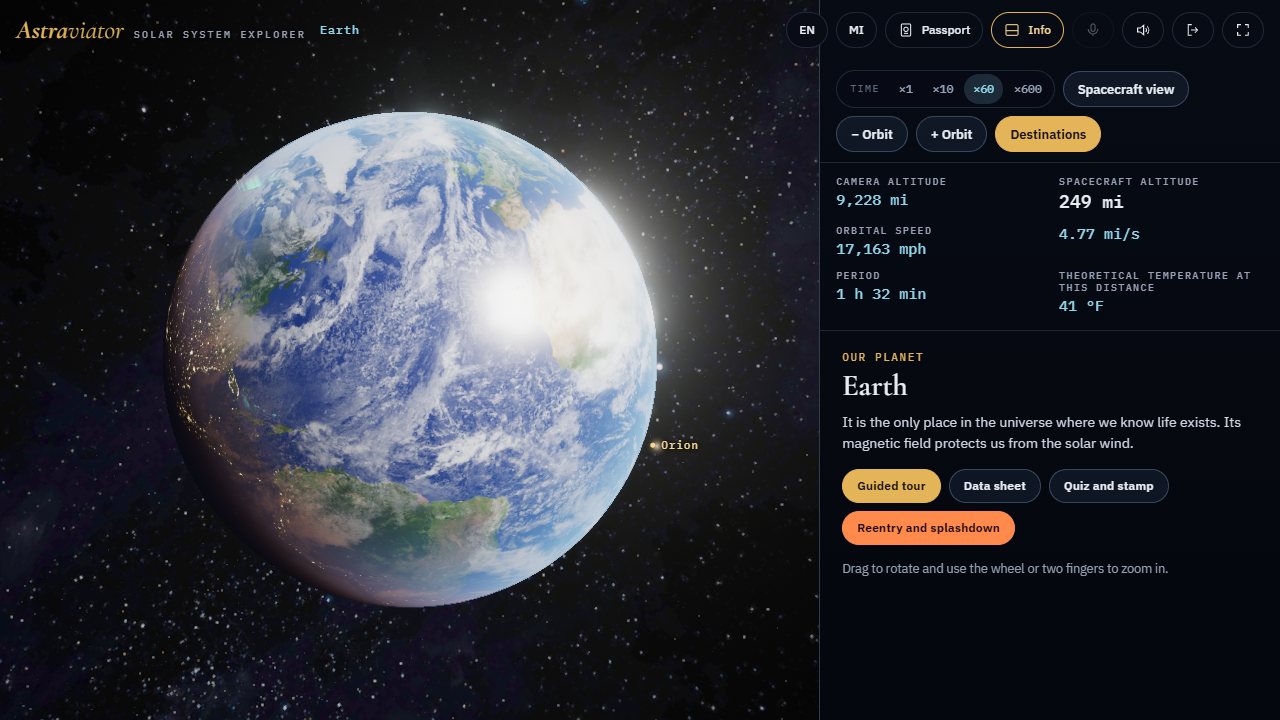
What is an eclipse? Solar and lunar eclipses for kids
In an eclipse, one space object moves into the shadow of another. There are two kinds: solar eclipses, when the Moon hides the Sun, and lunar eclipses, when the Moon turns red and dark.
Key facts
- A solar eclipse happens when the Moon passes between the Sun and Earth.
- A lunar eclipse happens when Earth passes between the Sun and the Moon.
- Solar eclipses happen at New Moon and lunar eclipses at Full Moon.
- Never look at the Sun during an eclipse without special eclipse glasses.
- Lunar eclipses are safe to watch with your eyes.
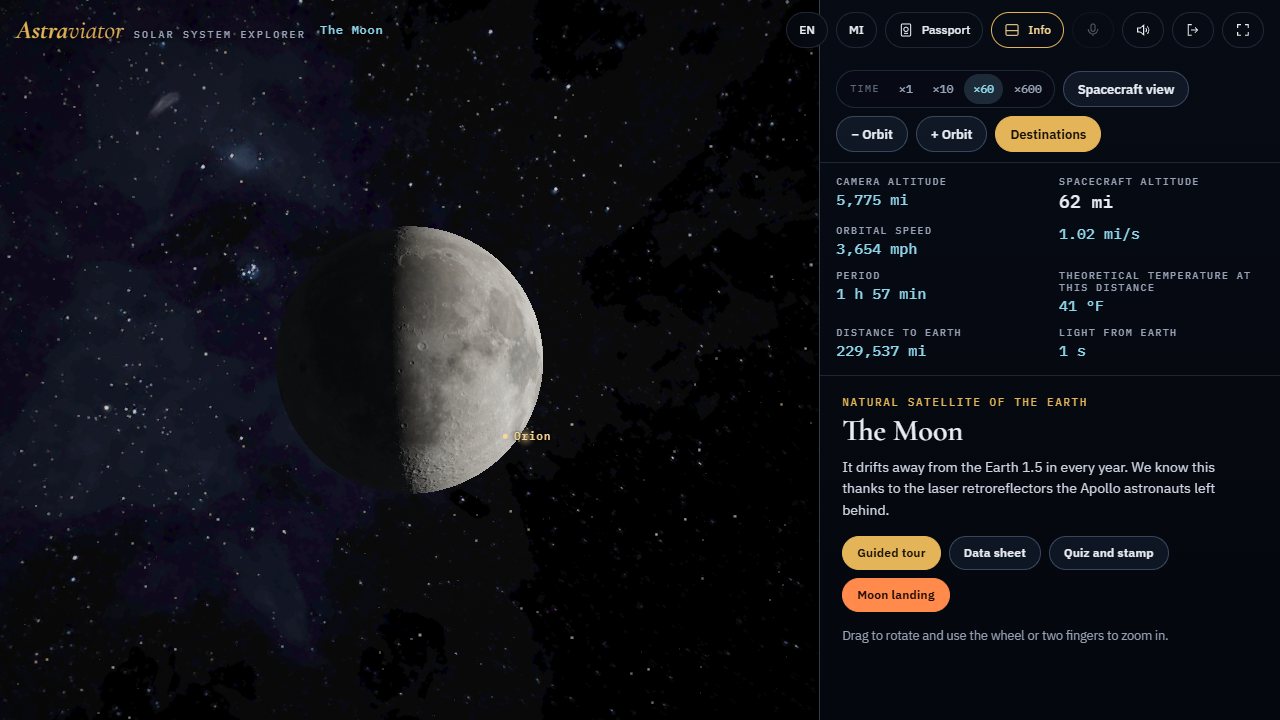
Solar eclipse: the Moon blocks the Sun
A solar eclipse happens when the Moon moves exactly between the Sun and Earth, at New Moon. The Moon’s shadow falls on a small part of Earth, and people there see the Sun covered. Here is a surprising fact: the Sun is about 400 times wider than the Moon, but it is also about 400 times farther away, so they look almost the same size in the sky.
- Total eclipse: the Moon covers the whole Sun. The sky gets dark, stars may appear and the Sun’s glowing outer atmosphere, the corona, shows. Totality lasts only a few minutes, at most about 7 minutes.
- Partial eclipse: the Moon covers only part of the Sun. This is what most people see.
- Annular eclipse: the Moon is a bit farther away and looks smaller, so a bright “ring of fire” remains around it.
Lunar eclipse: Earth blocks the sunlight
A lunar eclipse happens when Earth moves between the Sun and the Moon, at Full Moon. Earth’s shadow falls on the Moon. During a total lunar eclipse the Moon does not disappear: it turns a deep orange-red, because a little sunlight bends through Earth’s atmosphere and reaches the Moon. It is sometimes called a “blood Moon”. Totality can last up to about an hour and a half.
Why isn’t there an eclipse every month?
The Moon’s orbit is tilted about 5 degrees compared with Earth’s orbit around the Sun. Most months, the Moon passes a little above or below the line between the Sun and Earth, so the shadows miss. Eclipses happen only when everything lines up, a few times a year.
How to watch safely
- Solar eclipses: never look at the Sun with your naked eyes, sunglasses, binoculars or a telescope. It can permanently damage your eyes. Use certified eclipse glasses (look for ISO 12312-2) or a pinhole projector.
- Lunar eclipses: completely safe to watch with your eyes, binoculars or a telescope.
On August 12, 2026, a total solar eclipse crossed Greenland, Iceland and northern Spain, and was seen as a partial eclipse across Europe.
Try it at home
What you need
- A lamp without a shade (the Sun)
- A ball about the size of a tennis ball (the Moon)
- A larger ball or an orange (Earth)
Steps
- Place the lamp, then the Moon, then Earth on a table, in a straight line. This is a solar eclipse: the shadow of the Moon falls on Earth.
- Now put Earth in the middle, between the lamp and the Moon. Earth’s shadow falls on the Moon: a lunar eclipse.
- Make a pinhole projector: poke a small hole in a card and let sunlight pass through it onto a white paper. You will see a small round image of the Sun, and during a partial eclipse it looks like a bite was taken out of it. Look at the paper, never at the Sun!
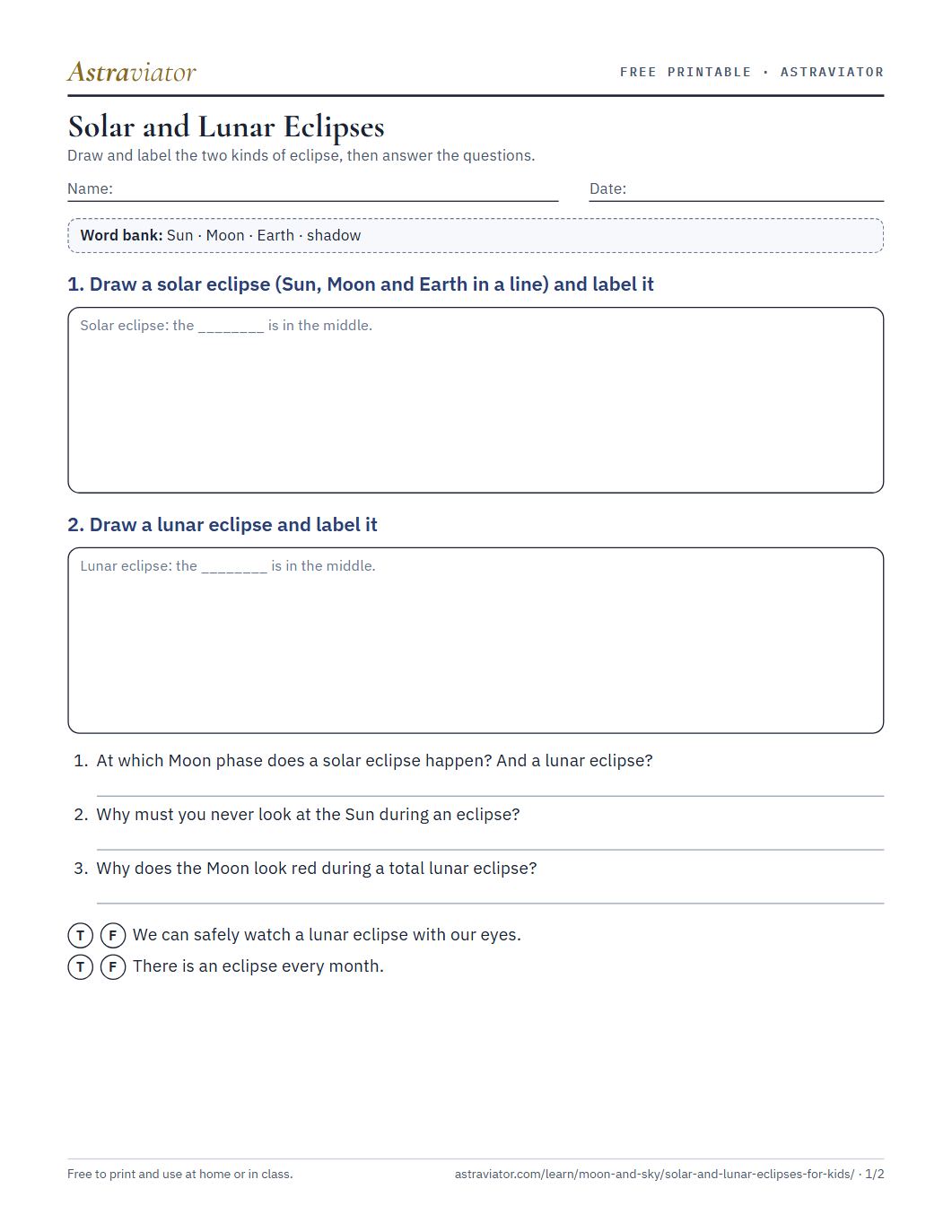
Free printable worksheet: Solar and Lunar Eclipses
Print it, solve it, check it with the answer key on page 2. No sign-up, no email needed.
Download the worksheet (PDF)PDF, 2 pages (worksheet + answer key), US Letter size.
Quick answers
What is a solar eclipse?
When the Moon passes between the Sun and Earth and blocks some or all of the Sun’s light.
What is a lunar eclipse?
When Earth passes between the Sun and the Moon and its shadow falls on the Moon.
Can I look at a solar eclipse?
Only with certified eclipse glasses. Never look at the Sun without them.
Why does the Moon turn red in a lunar eclipse?
Sunlight bends through Earth's atmosphere and the red light reaches the Moon, like a sunset projected onto the Moon.