Astraviator

Sky maps & books

Sky maps and books to learn the night sky

A telescope shows you what is there; a map tells you where to look. These are the cheap, battery-free things that make the first month of stargazing work, in the order to buy them.

5 min read

1. A planisphere, before any telescope

Most people who buy a telescope cannot name five constellations, and then spend the first evening pointing it at nothing. A planisphere fixes that for the price of a sandwich lunch. Learn Orion, the Plough and Cassiopeia and the sky stops being a field of dots.

Philip's Philip's Planisphere
Best sky map to start with

Philip's Planisphere (Latitude 51.5 North)

Anyone in the UK or Ireland who wants to learn the constellations, with or without a telescope.

From £12.34

Full specs →

Check price on Amazon
Collins Collins Stargazing
Best beginner book

Collins Stargazing: Introductory Guide to Exploring the Night Sky

Complete beginners who would like one book that explains the sky before they buy anything else.

From £7.99

Full specs →

Check price on Amazon
Philip's Philip's Planisphere
Best sky map to start with

Philip's Planisphere (Latitude 51.5 North)

From £12.34

Type
Rotating planisphere, Britain & Ireland
Format
Card and plastic wheel
Publisher
Philip's

What works

  • Made for UK and Irish latitudes (51.5° N), so the horizon is right for where you live
  • Turn the wheel to today's date and time and it shows what is above you
  • No batteries, no screen, nothing to update
  • Cheap enough to leave in the garden bag

Watch out

  • Two wheels to align, which takes five minutes to get used to
  • Best used with a red torch so you keep your night vision

Verdict. The first thing to buy for the sky itself. Learn ten constellations with this and every telescope session gets easier, because you know where to point it.
Check price on Amazon
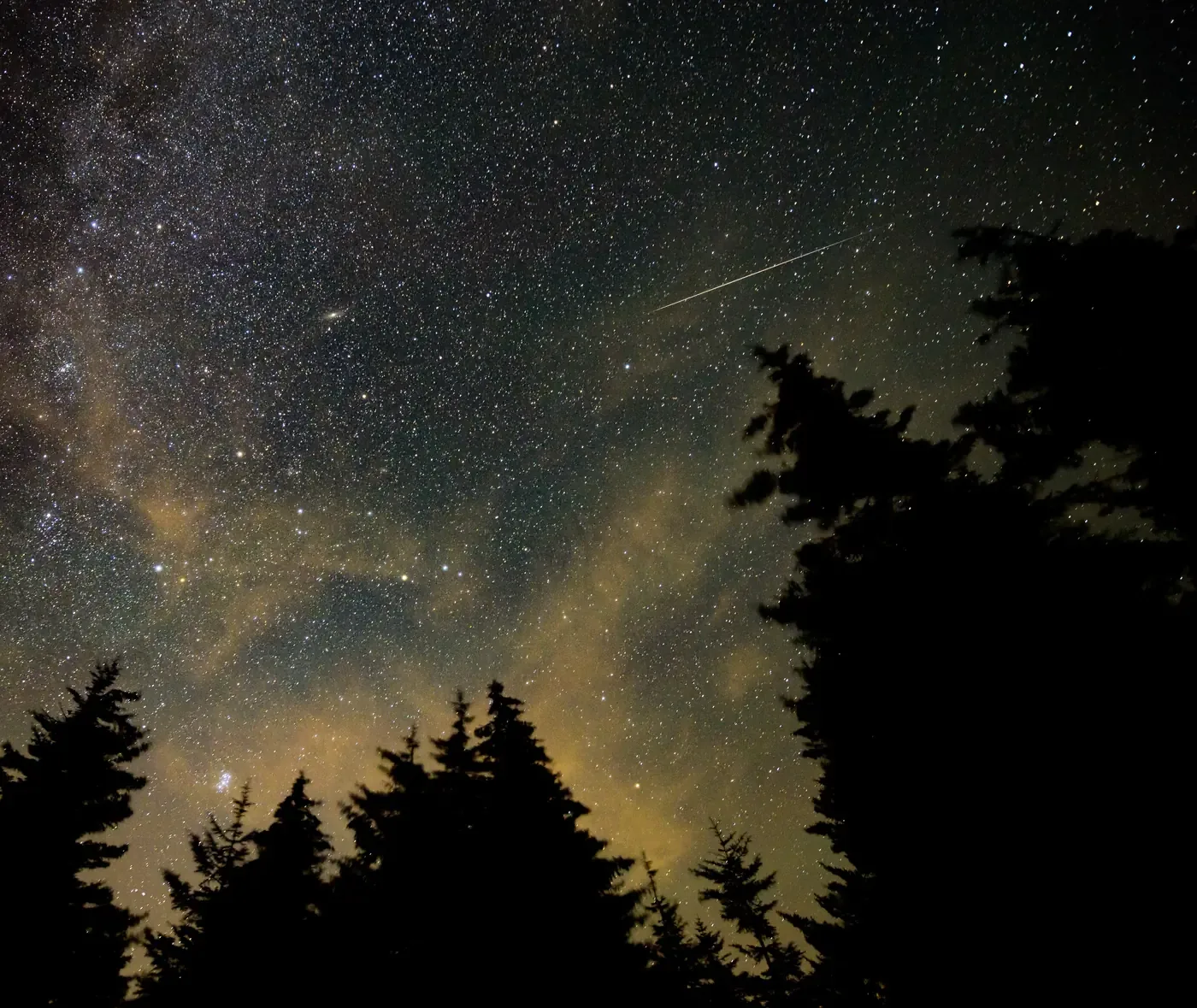
The Milky Way seen from a dark site
The Milky Way from a dark site, the view that turns people into observers. Bill Ingalls / NASA

2. A folded sky map, for the table or the wall

National Geographic National Geographic Night Sky Map
Folded wall or table map

National Geographic Night Sky Map, Northern Hemisphere

From £14.95

Type
Folded star chart
Format
Folded map
Publisher
National Geographic Maps

What works

  • Constellations, planets and celestial features on one large sheet
  • Listed as waterproof
  • Works as a poster for a child's bedroom

Watch out

  • Shows the northern hemisphere in general, not tuned to a UK date and time
  • Needs a flat surface to read

Verdict. A good map for learning the sky at home. For taking outside, buy the planisphere instead.

Check price on Amazon

3. The Moon, with names on it

Every first telescope aims at the Moon, and it is a better view with a map beside you. Seas, craters and mountain ranges all have names, and a child will happily tick them off one by one.

Philip's Philip's Moon Map
Moon map

Philip's Moon Map

From £7.99

Type
Moon map
Format
Folded map
Publisher
Philip's

What works

  • Names the craters and seas you will see in even a small telescope
  • Turns a quick look into a proper tour
  • Cheapest item on this page

Watch out

  • The Moon changes phase, so only part of the map is visible on any night
  • You will want a red torch to read it outside

Verdict. Cheap and useful. The Moon is the one target that always works, and a map turns 'a grey ball with dents' into places with names.

Check price on Amazon
Collins Collins Moongazing
Moon guide

Collins Moongazing: Beginner's Guide to Exploring the Moon

From £7.89

Type
Moon guide book
Format
Paperback
Length
96 pages
Publisher
Collins

What works

  • Includes Moon maps, eclipses, blue moons and supermoons
  • Short at 96 pages, so a child can finish it
  • Pairs naturally with a first telescope or binoculars

Watch out

  • Overlaps with the Moon map if you buy both: pick one to start

Verdict. The right second book for a household with a telescope, because the Moon will be the thing you look at most.

Check price on Amazon

4. One book that explains the lot

Collins Collins Stargazing
Best beginner book

Collins Stargazing: Introductory Guide to Exploring the Night Sky

From £7.99

Type
Beginner's guide book
Format
Paperback, illustrated
Length
224 pages
Publisher
Collins

What works

  • 224 illustrated pages for the price of a sandwich lunch
  • Explains what you can see with the naked eye, binoculars and a telescope
  • Very well reviewed by thousands of buyers

Watch out

  • Not specific to UK dates, so pair it with a planisphere or a yearly guide

Verdict. If you buy one book, buy this one. It tells you what to expect from the sky, which is what most beginners are missing.

Check price on Amazon

5. A guide for this year, so there is always something to look for

Planets move, meteor showers come and go, and eclipses have dates. A yearly guide tells you what is worth going outside for each month.

Philip's Philip's 2027 Stargazing Guide
Year guide, UK

Philip's 2027 Stargazing Month-by-Month Guide to the Night Sky, Britain & Ireland

From £6.64

Type
Yearly sky guide
Format
Paperback
Length
96 pages
Publisher
Philip's

What works

  • Written for Britain and Ireland, month by month
  • Published for 2027, so the events are current
  • Under £7

Watch out

  • Dated: it is only useful for one year

Verdict. A cheap way to always have something to look for. Buy it in the autumn, use it all year.

Check price on Amazon

6. For children

Collins Children's Picture Atlas of the Stars
Best for children

Collins Children's Picture Atlas of the Stars

From £9.90

Type
Children's star atlas
Format
Hardback
Length
48 pages
Publisher
Collins

What works

  • 48 pages of constellations in a picture format a child can read alone
  • From Collins, a trusted astronomy publisher
  • A good gift alongside a first telescope

Watch out

  • Short; a keen child will finish it quickly

Verdict. The book to give a child along with binoculars or a tabletop telescope: it gives them something to look for.

Check price on Amazon

Pair it with the telescope for kids guide: a book that tells a child what to look for matters more than a stronger lens.

7. A red torch, to read all of these by

A phone screen or a white torch ruins your dark-adapted eyes for around twenty minutes. A red light does not. Get one before the first night out and you will never be tempted to switch the white one on.

Carson Carson RedSight Pro
Best red torch

Carson SL-33 RedSight Pro Red Light Torch

From £9.99

Type
Red LED torch, two brightness settings

What works

  • Red LED keeps your eyes dark-adapted
  • Two brightness settings, so you can go dim
  • Glow-in-the-dark grip, easy to find on a dark lawn

Watch out

  • Handheld, so one hand is busy

Verdict. It costs less than a pizza and saves your night vision every session. White light ruins it for twenty minutes.

Check price on Amazon
BORUIT BORUIT head torch
Hands-free option

BORUIT LED Head Torch, Red and White Light

From £10.19

Type
Head torch with red light
Weight
70 g

What works

  • Red, red flashing and two white modes in one torch
  • Lightweight at 70 g and battery powered (3 AAA included)
  • Hands free for star maps and eyepieces

Watch out

  • Not as fine a brightness control as a dedicated astronomy torch
  • The white mode must stay off while observing

Verdict. The practical choice if you also walk the dog or camp. Keep it on red at the telescope.

Check price on Amazon

What about a laser pointer?

Green laser pointers are popular at star parties for pointing at constellations, but they are not a beginner purchase and we do not link one. The strong ones are restricted for good reason, and shining any laser at an aircraft is a criminal offence in the UK. A planisphere and a red torch do the same job with none of the risk.

What not to buy

  • A "glow in the dark" star ceiling. It teaches nothing about the real sky.
  • A star map with no latitude on it. If it does not say which latitude it is for, it will not match your sky.
  • A phone-only plan. Use the app if you like, but a printed map does not run out of battery in the cold.

Eyes first: give your eyes twenty minutes to adapt before you judge what a telescope shows. A red light and a map are what let you wait that long without giving up.

Keep reading

Frequently asked questions

What is a planisphere?
A rotating star chart. You set the date and the time on two wheels and the window shows the stars that are above you at that moment. It costs about the same as a paperback and never needs a battery.
Do I need a planisphere if I use a phone app?
No, but a planisphere is quicker in the dark, because a phone screen ruins your night vision and drains in the cold. Many people use both: the app to identify, the planisphere to learn.
Which latitude should I buy?
For the UK and Ireland, one made for about 51 to 52 degrees north. The wrong latitude puts the horizon in the wrong place and the stars that are visible out of step.
Do I need a red torch?
It is the cheapest accessory that makes a difference. White light destroys your dark adaptation for around twenty minutes; red light barely affects it.