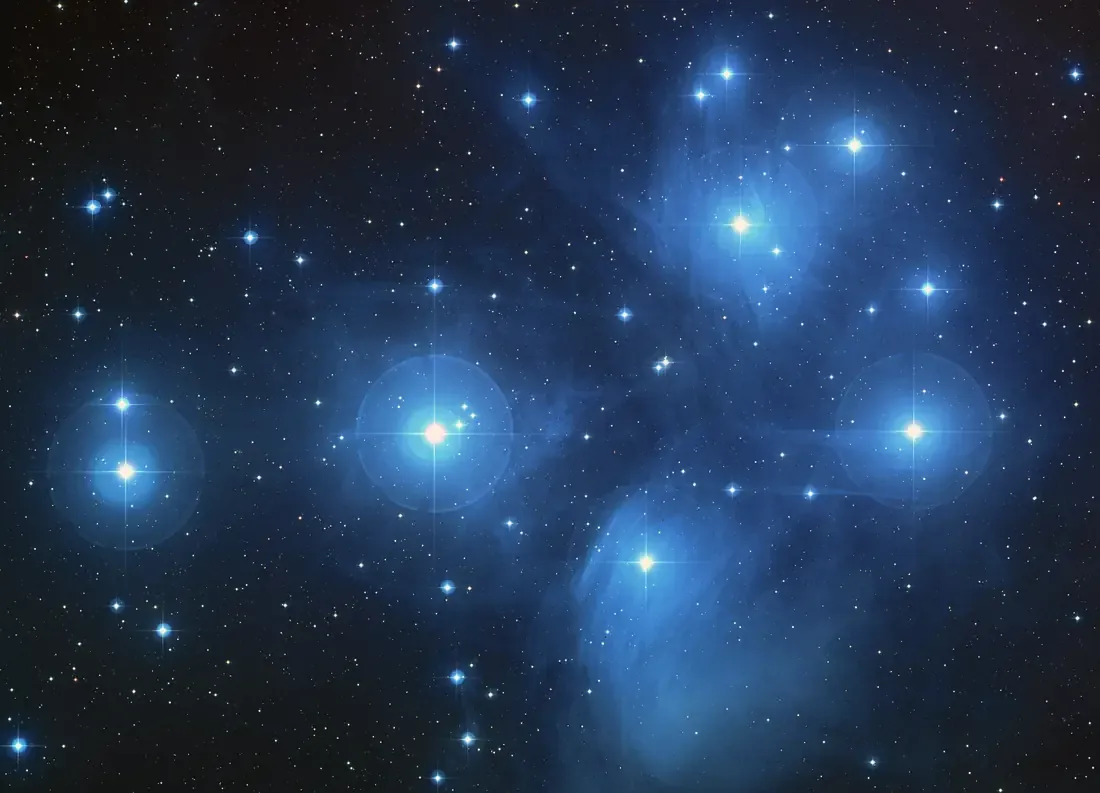
The Pleiades, better in binoculars than in most telescopes. NASA / ESA / AURA / Caltech / Palomar Observatory
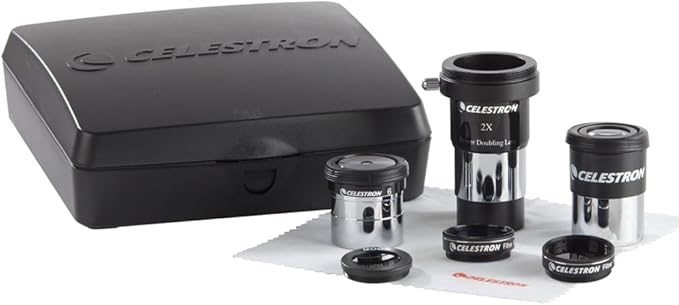
A 5x Barlow. It magnifies blur, not detail.
A phone adapter as your first purchase. It works for the Moon and frustrates you on everything else.
A solar filter that screws onto the eyepiece. Never. Only a full-aperture filter over the front of the tube, and only with supervision.
A set of coloured filters. One moon filter does the job that matters.
A bigger telescope's worth of accessories before you have used the telescope you own. Learn the sky first; the shopping list gets shorter.
Solar safety, in one line: never point a telescope or binoculars at the Sun without a full-aperture filter fitted over the front. An eyepiece filter will crack and blind you.
There is no single best beginner telescope, only the best one for your sky, your space and your patience. These three cover almost everyone, and below them is the whole field from
They cost less, they need no mount, and they show you the sky the way your eyes are built to see it. Many observers use binoculars more than their telescope, years later.
Every object below is described as your eye sees it at the eyepiece, not as a camera records it. The size of the telescope changes how much detail appears, never the colour of a ph
What accessory should I buy first for a reflector?
A Cheshire collimator. Without correct collimation the mirror is misaligned and the image is soft, and no eyepiece fixes that.
Do I need a Barlow lens?
It is the cheapest way to double your magnifications, and it is fine for the Moon and planets. It adds glass, so it will not improve a faint deep-sky view.
Are coloured filters useful?
Rarely. A moon filter earns its place; the coloured planetary filters sold in kits are used once and forgotten.
What is the best upgrade for a small telescope?
A better eyepiece at a useful focal length, then a darker sky. Not a bigger Barlow, and not a camera adapter.