How big are the planets? Planet sizes for kids
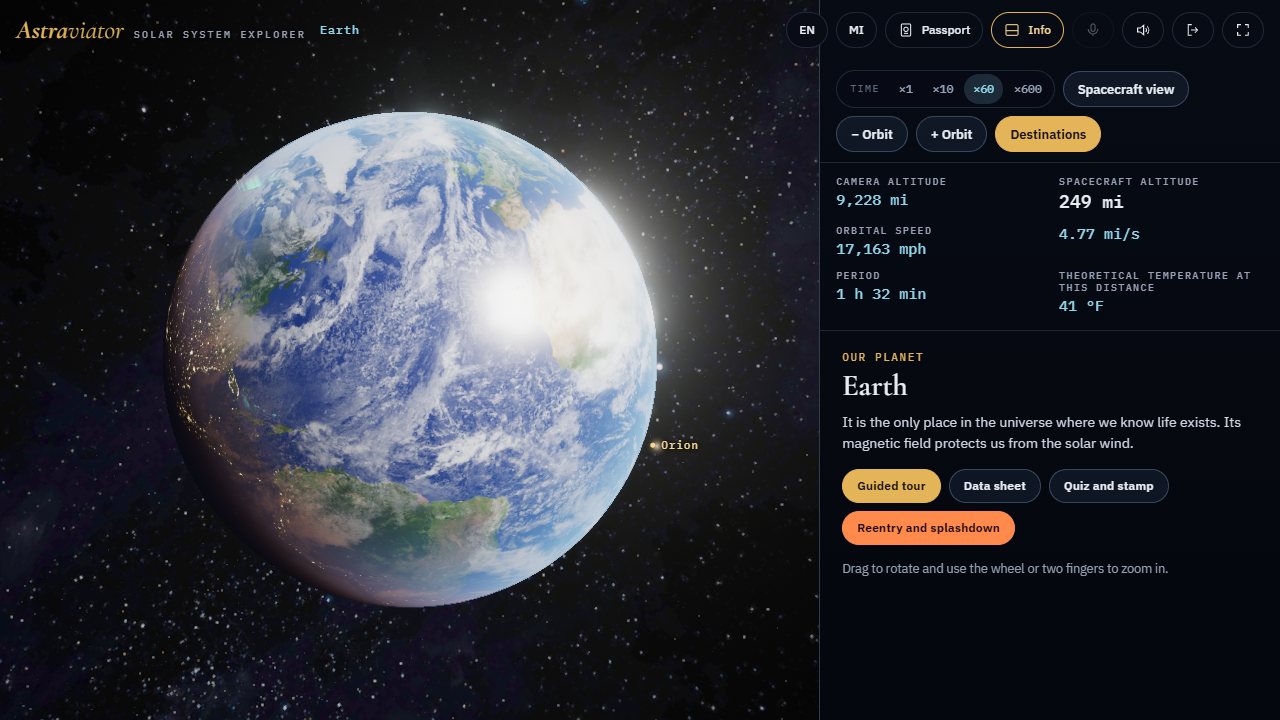
Earth feels huge when you travel across it. But Jupiter is more than 11 Earths wide, and the Sun is more than 100 Earths across. Comparing sizes is the best way to understand how large the solar system really is.
The eight planets, from smallest to largest
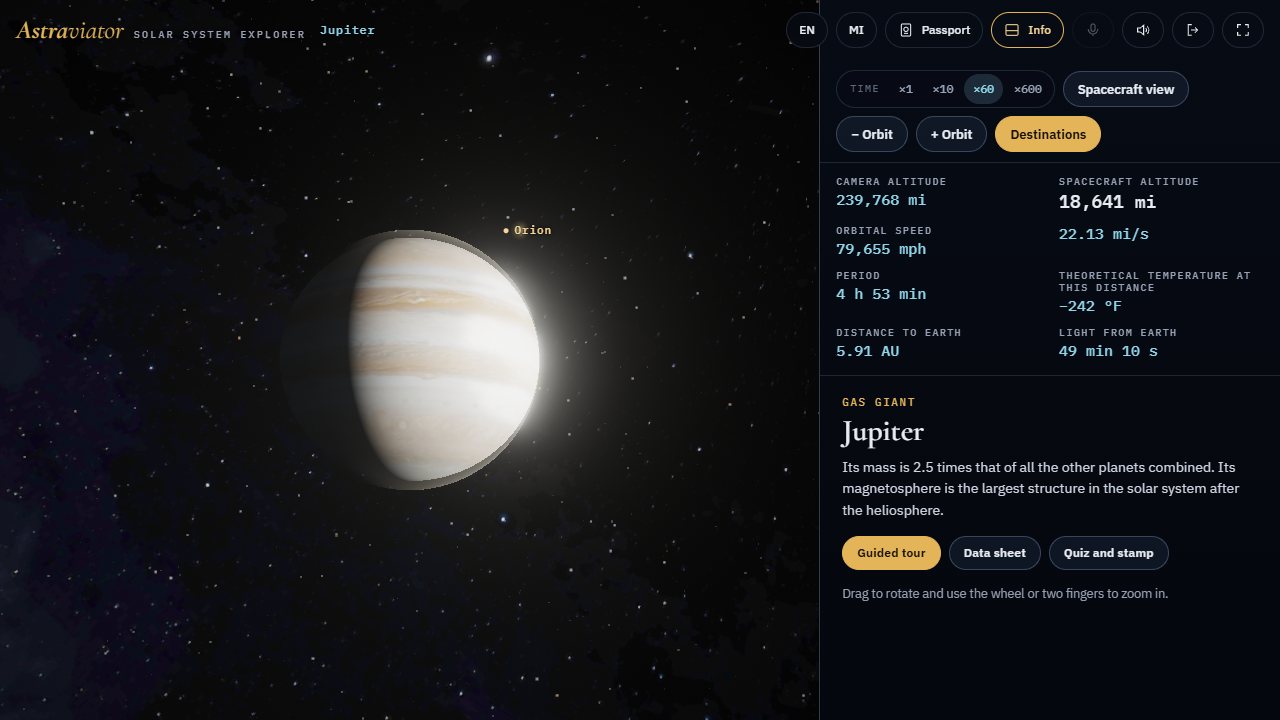
| Planet | Diameter | How many Earths wide? |
|---|---|---|
| Mercury | 3,032 miles | 0.38 |
| Mars | 4,212 miles | 0.53 |
| Venus | 7,521 miles | 0.95 |
| Earth | 7,918 miles | 1.00 |
| Neptune | 30,599 miles | 3.9 |
| Uranus | 31,518 miles | 4.0 |
| Saturn | 72,365 miles | 9.1 |
| Jupiter | 86,880 miles | 11.0 |
| Moon (for comparison) | 2,159 miles | 0.27 |
| Sun (for comparison) | 864,576 miles | 109 |
Two kinds of planets
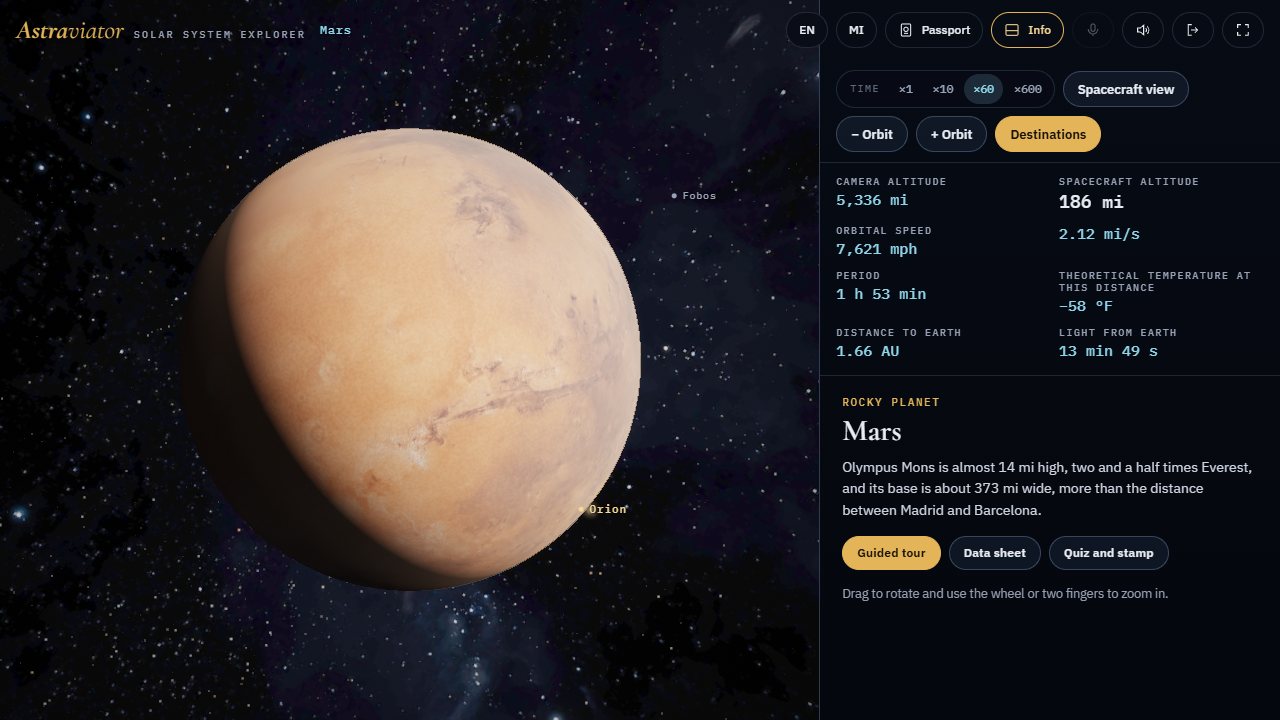
The four planets closest to the Sun, Mercury, Venus, Earth and Mars, are rocky planets. They are small and have solid ground. The four farthest, Jupiter, Saturn, Uranus and Neptune, are giant planets. They are mostly gas and liquid, with no solid surface to stand on.
- Jupiter is the biggest planet: about 11 Earths would fit across it. By volume, over 1,300 Earths would fit inside it.
- Saturn is almost as wide as Jupiter, and so light that, in a big enough bathtub, it would float.
- Uranus and Neptune are about four times as wide as Earth.
- Mercury is the smallest planet, only a little bigger than our Moon.
Earth next to the Sun
The Sun is so big that about 109 Earths would fit side by side across it. More than one million Earths could fit inside it. Compared with the Sun, Earth would look like a tiny pea next to a beach ball.
Make it real with a scale model
If Earth were the size of a marble, 1 centimeter wide, here is how big the others would be: Mercury is 0.4 cm (a small bead), Venus is 0.95 cm (another marble), Mars is 0.5 cm, Jupiter is 11 cm (a grapefruit), Saturn is 9 cm (a large orange), Uranus and Neptune are 4 cm (a ping-pong ball), and the Sun would be 109 cm, taller than a 3-year-old. That fits the activity below.
Try it at home
What you need
- Fruit, balls and beads from around the house
- A tape measure or ruler
- Chalk (optional)
Steps
- Choose a pea or a bead (about 1 cm) to be Earth.
- Find something for Jupiter that is about 11 cm wide (a grapefruit or a softball works well) and for Saturn about 9 cm (an orange).
- Use something about 4 cm wide for Uranus and Neptune (a ping-pong ball or a walnut).
- For the Sun, draw a circle on the ground 109 cm (3.5 feet) wide with chalk, or use a big exercise ball.
- Line up the planets from smallest to biggest and take a photo.
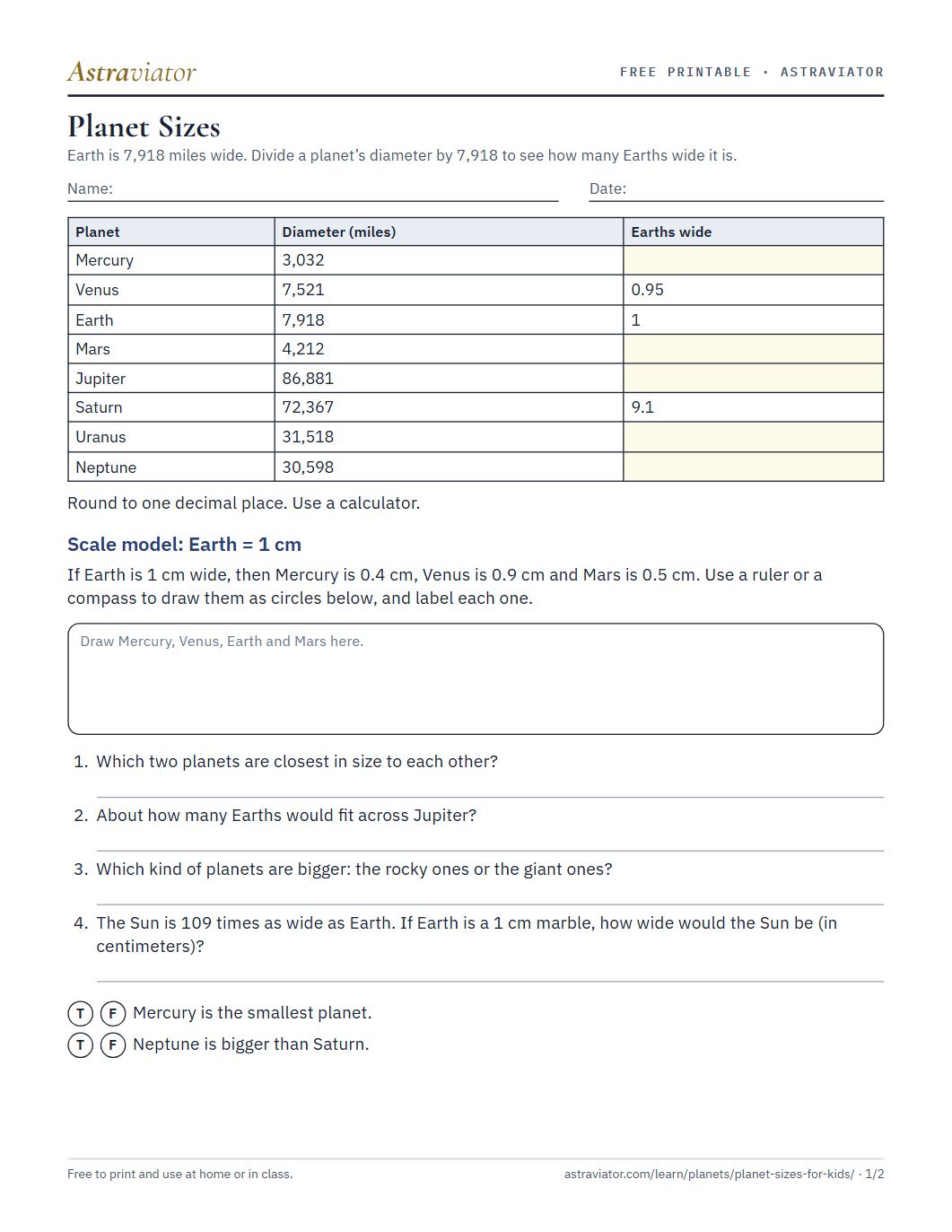
Free printable worksheet: Planet Sizes
Print it, solve it, check it with the answer key on page 2. No sign-up, no email needed.
Download the worksheet (PDF)PDF, 2 pages (worksheet + answer key), US Letter size.
Quick answers
What is the biggest planet?
Jupiter. It is about 11 times wider than Earth.
What is the smallest planet?
Mercury, only slightly bigger than the Moon.
How many Earths fit inside the Sun?
More than one million.
Are Uranus and Neptune the same size?
Almost. Uranus is slightly bigger, about 4 times as wide as Earth, and Neptune is just a little smaller.